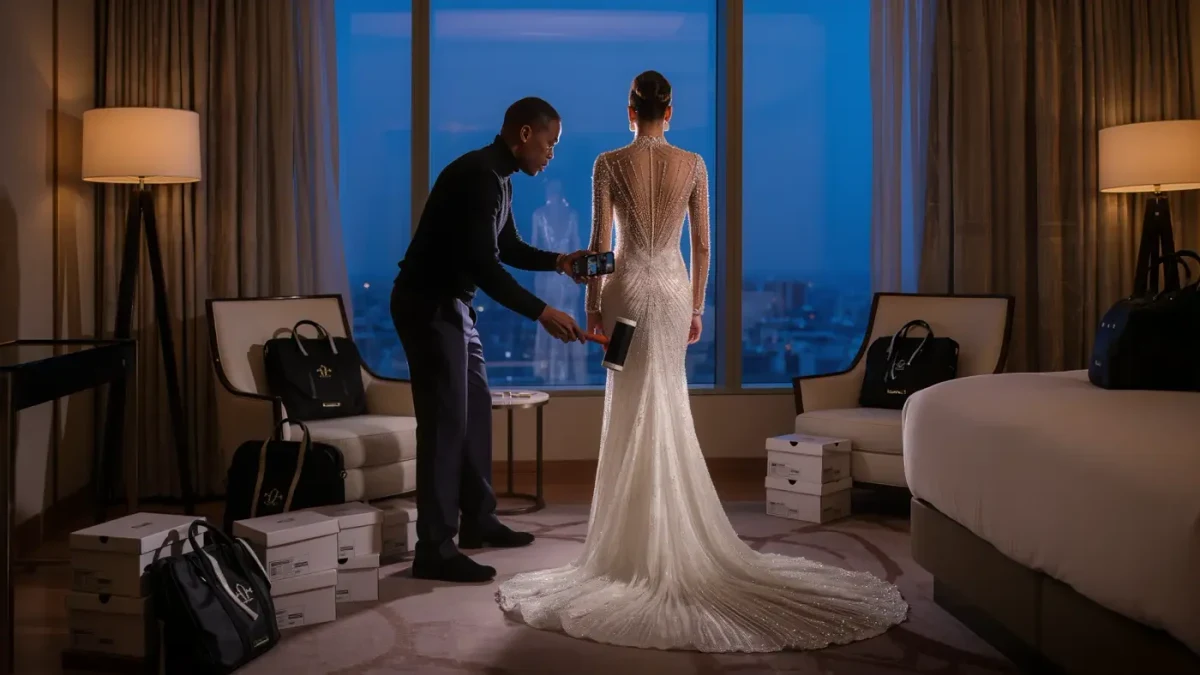
Law Roach, the stylist behind Zendaya's most documented red carpet chapters, received the CFDA's inaugural Stylist Award in November 2022, an honor Vogue covered in a profile of his method. Roach prefers the title "image architect," because, as Vogue reported, he builds an entire vision rather than selecting dresses.
Who is Law Roach?
A Chicago-born stylist who became one of Hollywood's most in-demand image makers by working alongside Zendaya from the start of her red carpet life. When the CFDA created its first Stylist Award, it went to him. In Vogue's profile around the 2022 ceremony, Roach described a client list that includes Zendaya, Kerry Washington, Bella Hadid, and Celine Dion, and said of the recognition: "for me to be recognized by the CFDA, it's the ultimate compliment." The award itself marked a shift: institutions had historically honored designers, not the people assembling the looks.
What does an image architect actually do?
Four things, all visible in the credited record. First, narrative: Vogue noted that Roach "doesn't simply dress his clients, rather he creates an entire vision, story, and mood board for them." Second, archive work: pulling pieces like the Vetements hoodie thatthat reframed an entire star's fashion standing. Third, coordination with fashion houses over loans, fittings, and exclusivity for major carpets. Fourth, continuity: a stylist keeps a client's visual history coherent across premieres, tours, and editorials, so each appearance reads as a chapter rather than a one-off.
How did the Celine Dion turnaround happen?
Through a stylist's risk calculus. Vanity Fair documented the moment in its report on Dion's transformation into a fashion figure, noting that during her first couture week with Roach, she wore a Vetements hoodie printed with the sinking Titanic — a reference to the film behind her biggest hit — styled with gold Gucci sandals. "Céline has no fear," Roach told Vanity Fair. "Fashion is supposed to be polarizing. It has to be overwhelming." The piece is a study in the job itself: one archival garment, one deliberate reference, and a star reintroduced to a new audience within a single photo call.
How did Dion find Roach in the first place?
Through her children's television habits. Vanity Fair reported that Dion discovered Roach because her kids were dedicated viewers of the Disney Channel sitcom "K.C. Undercover," which starred a young Zendaya — the actress Roach had been styling since her early red carpet days. The pairing began at couture week, with Dion just weeks into the partnership when the Vetements hoodie moment landed. That origin matters for what it shows about the profession: a stylist's client pipeline runs on visible work, and Roach's work with Zendaya was the audition that won him one of the biggest stages in fashion.
What does a credited look actually consist of?
Every component, named. The Dion couture-week look that Vanity Fair documented breaks down like this:
| Component | Credit | Detail per Vanity Fair |
|---|---|---|
| Top | Vetements | Archived hoodie printed with young Leonardo DiCaprio and Kate Winslet over the sinking Titanic, "pulled from the Vetements archive specifically for Dion" |
| Shoes | Gucci | Gold sandals |
| Trousers | Simple skinny jeans | Styled to let the archival piece lead |
| Author | Law Roach | Weeks into the partnership at the time |
Read the table and the job stops being mysterious: a reference chosen for meaning, an archive source, a supporting cast of classics, and a name attached to the whole assembly. That is a stylist's signature, published in the credits.
Why do stylists now get named credits?
Because the industry started publishing the paperwork behind the pictures. Red carpet galleries routinely name the stylist alongside the designer; awards bodies like the CFDA now trophy the discipline; and profile interviews treat styling as a career with a methodology, quotes, and a catalog. That visibility matters commercially: a credited stylist attracts clients, brand consulting contracts, and jury invitations, and a look's full credit list — gown, jewelry, shoes, glam team — travels with the photograph forever. When Roach received the CFDA honor, Vogue framed him as "a celebrity in his own right," which is precisely what the credit system made possible.
What should readers take from the credited looks?
That a red carpet appearance is assembled, not improvised, and that the assembler's name is part of the work. The pattern in Roach's record — a muse relationship measured in years, archival references chosen for meaning, and transformations built look by look — is the standard operating model at the top of the industry. When a photograph credits a stylist, it is telling the reader who authored the image; reading that credit is the difference between seeing a dress and understanding a decision. The credit line is also where the business lives — consultancies, house collaborations, and future client rosters all trace back to names published beside the looks. A single credited appearance can travel for years through archives, galleries, and award submissions, long after the carpet is rolled up.