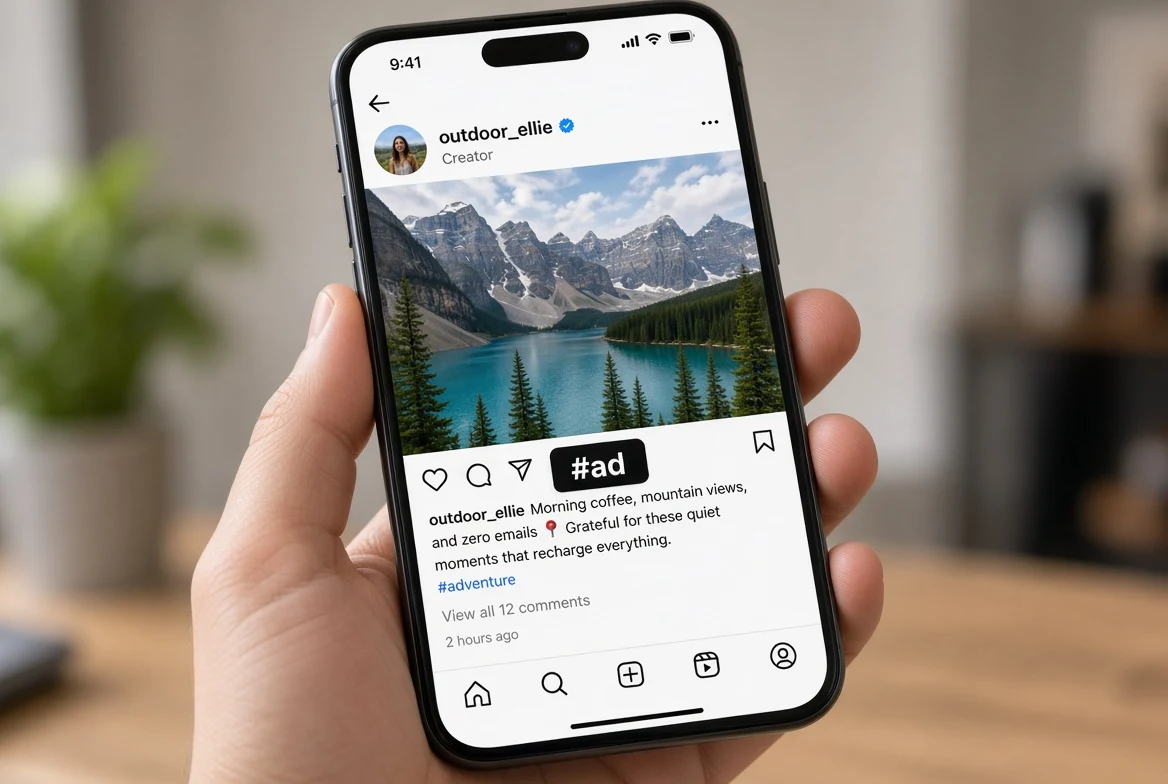
The European Union is moving toward a single, binding rule for paid creator content. Draft documents seen by Agence France-Presse (AFP) show the EU would require influencers to label sponsored videos and posts as an “advertisement” or a “commercial collaboration.” EU Consumer Protection Chief Michael McGrath is due to unveil the plan on Wednesday, Net Influencer reported.
The draft goes further than labeling. It would bar brands from asking influencers to encourage children to buy products, or to persuade their parents to buy items in commercial content. For the creator economy, that is the sharpest line in the proposal: it reaches into how campaigns are briefed, not just how they are captioned.
Why does this matter now? Because the current rules are a patchwork, and the patchwork is not working. A December 2025 briefing from the European Parliamentary Research Service (EPRS) found no single, dedicated EU law on influencer marketing. The relevant rules sit spread across consumer protection, audiovisual media and digital regulation. Under the Unfair Commercial Practices Directive, hiding a trader’s commercial intent already counts as a misleading omission. The problem is that nobody agrees on who is responsible for disclosing it. EPRS said the duties of different actors in the value chain, including the brands whose products influencers promote, remain unclear. A 2024 fitness check of EU consumer law reached the same conclusion.
The compliance record shows what that uncertainty produces. In a 2024 sweep, the European Commission and consumer authorities from 22 member states, Norway and Iceland reviewed posts by 576 influencers. Ninety-seven percent posted commercial content. Only about 20% systematically indicated that posts were advertisements, according to EPRS. Some 38% skipped platform-provided labels such as “paid partnership” entirely and used softer terms like “collaboration” or “thanks to the brand” instead.
Read those two numbers together and the draft’s logic becomes clear. A fixed pair of phrases — “advertisement” or “commercial collaboration” — closes the loophole that “collab” and “thanks to the brand” currently occupy. Vague gratitude stops being a workable substitute for disclosure. For creators whose income depends on looking like a friend rather than a seller, that is a real commercial shift, not a paperwork change.
What exactly would the draft require?
Three things stand out for anyone working in branded content. First, the labeling rule itself: sponsored videos and posts would carry the words “advertisement” or “commercial collaboration,” per the draft documents seen by AFP. Second, the child-protection rule: brands could not ask influencers to encourage children to buy products or to persuade their parents to buy items in commercial content. That second provision would end an entire campaign format — the “ask your parents” pitch aimed at young audiences through a creator they trust.
Third, the draft bundles influencer rules into a much wider consumer protection overhaul. It would ban “dark patterns,” which AFP described as features designed to deceive users into choices a seller prefers. Online sellers could not make false claims about a product’s availability or popularity, or suggest an item is popular and therefore scarce. “Drip pricing” — fees hidden until the end of a purchase — would be banned, and sellers would have to show the full price of an order before checkout.
Video games get their own section. Games would be barred from offering minors “pay-to-win” or “pay-to-progress” features. In-game virtual currencies would have to show their real-world value. Users would gain the right to disable autoplay and unrelated notifications, and platforms would have to remind consumers when a free trial ends, including the end date and the cost of continuing. We covered a connected angle in How Celebrity Cameos Get Arranged, From Script to Surprise Premiere.
Why a single EU law changes the bargaining table
Several member states have already moved ahead of Brussels. France adopted a dedicated influencer law in 2023. Spain adopted a royal decree in 2024 covering high-profile influencers. Italy’s communications regulator adopted a binding code of conduct in July 2025, and the Netherlands maintains a Social Media and Influencer Advertising Code, EPRS said. A pan-EU rule would replace that mosaic with one standard across the bloc’s entire market.
The industry was not waiting quietly for the proposal. EPRS recorded divided views before it emerged. The European Consumer Organisation BEUC has called for binding rules, standardized labeling and joint liability among influencers, their agencies and brands. The European Brands Association AIM has asked for an EU definition of “influencer” and shared liability across the advertising chain. The European Influencer Marketing Alliance prefers practical guidance and stronger enforcement to new legislation. TikTok, according to the briefing, has rejected inflexible, mandatory rules on how commercial content must be disclosed.
Notice where the disagreement sits. Consumer groups and brands both want shared liability and clearer definitions — they disagree on the details. The platforms and one industry alliance want guidance instead of law. The draft as described lands on the side of binding rules.
What it means for creators and the celebrities who hire them
For working creators, the practical effect would show up in contracts and captions at the same time. Agencies would need to standardize disclosure language across every market in the bloc. Campaign briefs could no longer include asks that lean on children as a purchase channel. And the labels themselves — “advertisement” or “commercial collaboration” — would sit on posts that currently say something softer.
Celebrity-brand partnerships sit inside the same current. They live on the same disclosure infrastructure as any mid-tier creator’s post. Clearer EU rules would not change who gets these deals. They would change how visibly the commercial relationship is marked when the content runs. Readers following this should also see How Celebrity Charity Announcements Really Work, Inside Swift and Kelce's $26 Million.
What remains unknown is the final text. These are draft documents, and the proposal is due to be unveiled Wednesday by McGrath. The contents described here rest on AFP’s reporting of the drafts as relayed by Net Influencer; no official EU document has yet been published, and the provisions remain unconfirmed until the proposal is officially unveiled. The labeling requirement, the child-marketing ban and the wider consumer provisions described by AFP are what the drafts contain now; what survives into the adopted law is the next development to watch. For anyone whose income depends on a sponsored post, the direction of travel is already legible: the soft “collab” era in the EU is ending, and the word “advertisement” is coming to the caption.