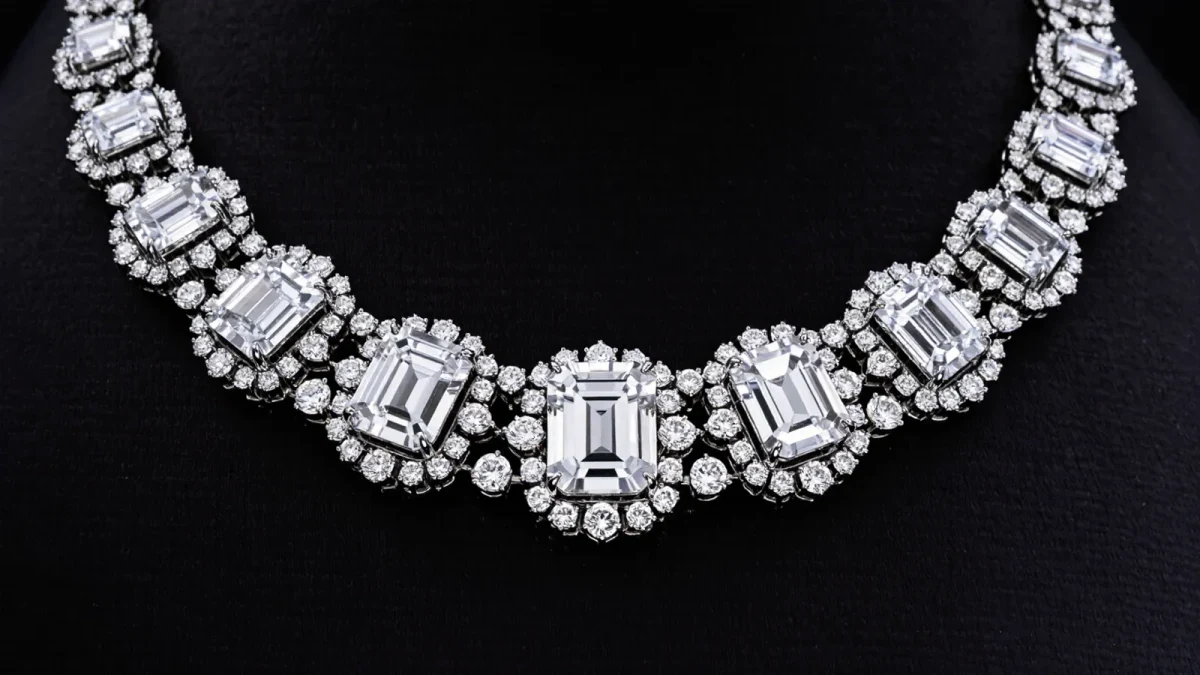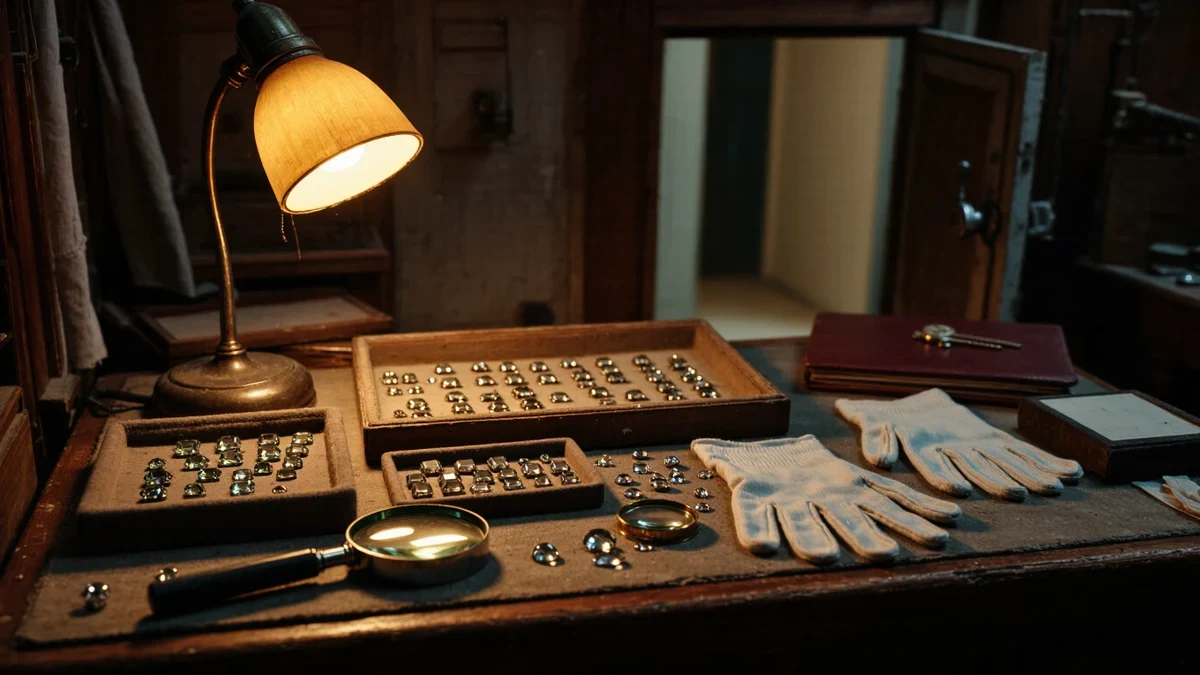
Red carpet jewelry runs on loans: houses lend vault pieces, stars wear them for one night, and the credits go out with the photographs. CNN Style reported that "it's the rare, not-for-sale pieces drawn from jewelers' private vaults that continue to dominate the conversation on social media" — diamonds no store will ever sell, lent for a single evening.
How Does a Jewelry Loan Actually Work?
A loan begins weeks before an event, when a stylist requests pieces for a specific client and a specific carpet. The house — Cartier, Tiffany & Co., Bulgari, De Beers, Mikimoto — selects from its archive or its high-jewelry vault, pieces that are often categorically not for sale. CNN's report detailed the caliber of what gets lent: Isha Ambani's custom necklace at the Met Gala, "a blinding cascade of diamonds" inspired by a historic 1930s Cartier design created for Maharaja Digvijaysinhji of Nawanagar and later reproduced for the film Ocean's 8. Diljit Dosanjh, the same report noted, wore a torso-spanning necklace echoing the ceremonial 1,000-carat-diamond necklace Cartier designed for Maharaja Bhupinder Singh of Patiala in the 1920s, now displayed at the Victoria and Albert Museum in London.
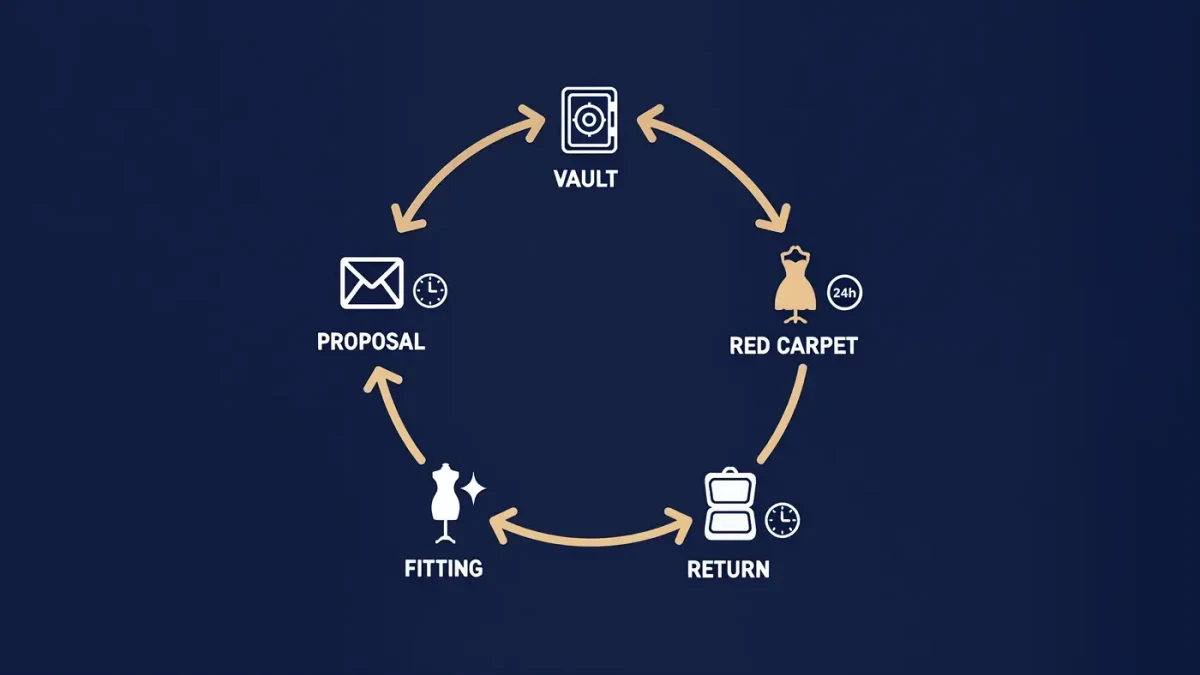
On the night, the pieces travel with security, are fitted to the gown, and are returned — usually within hours of the last photograph. What remains is the credit: jeweler, collection, sometimes carat weight, released to the press with the look's details. That credit is the entire commercial engine. A vault piece on a major star is the closest thing high jewelry has to a global product launch.
What Did the Emmys 2026 Carpet Show About the System?
The 78th Emmys on September 14, 2026 were a working demonstration. Prestige's jewelry desk recorded the night's credited high-jewelry moments — diamonds, pearls, and statement chokers across the carpet — with Zendaya among the stars in ten carats of diamonds on a carpet where she also carried an Euphoria nomination. The Premiere-era details matter less than the mechanism: every piece was identified to its house, because a look without a jeweler's name is, commercially, a night off for the vault.
The Oscars work the same way at higher wattage. E!'s live coverage of the March 15, 2026 Academy Awards described Elle Fanning, a Best Supporting Actress nominee, pairing her custom Givenchy gown with Cartier jewels — the wisteria design of the gown, she told E!'s Zuri Hall on the carpet, tied to the trellis that bloomed at her childhood home, with each petal sewn by designer Sarah Burton's team. Gown and jewels are styled as one story, and both credits travel together.
Who Decides Which Star Gets Which Piece?
The power sits with the houses, and they lend strategically: ambassador relationships first, then stars whose films and gowns fit the archive. The historian's version of the same logic is old — jewelers have dressed monarchs and movie stars for a century, which is why vault references like the Nawanagar necklace carry the weight they do. A simplified version of today's decision chain:
- The stylist submits the look, the event, and the client for the house's consideration.
- The house matches vault or high-jewelry pieces to the gown's neckline, era, and color story.
- fittings adjust clasps and lengths to the exact silhouette.
- Security escorts the pieces; they are returned after the final photograph.
- Credits — house, piece, collection — are released with the look to outlets and agencies.
Why Do the Loans Matter Beyond One Night?
Because they are the market. High jewelry's rarest pieces will never sit in a boutique; the red carpet is their only showroom, and the credited photograph is the sale that follows — in brand equity, in waiting lists for the pieces that are for sale, in the archive's own mythology. CNN's observation that the vault pieces "dominate the conversation" is, read commercially, the system working exactly as designed. For readers, the credit line is also the proof: a carat count with a house's name behind it is a fact, and facts — the jeweler, the piece, the event, the night — are the only jewelry story this publication tells.
What Happens to the Pieces the Morning After?
They go home. Clasps are checked, pieces are logged, and the vault absorbs them again until the next ambassador or the next August award season. Some loans become famous enough to tour — the Patiala-inspired references CNN traced now sit in a museum — and some are retired the moment their one night is over. The transience is the point: scarcity plus a single public appearance equals the attention high jewelry cannot buy in any advertising channel, which is why the houses guard the calendar of who wears what as carefully as any film studio guards a release date.
How Can Readers Read a Jewelry Credit Like a Pro?
Look for three names in any credible caption: the house, the piece or collection, and the event. A caption with all three — Bulgari, high-jewelry necklace, Venice 2026 — is a documented look; a caption with none is marketing. Carat weights belong to the house’s own release, stylists belong in the credit block, and a star “stacking” or “de-accessioning” family jewels is a story only the family or the house can confirm. The 2026 carpets, from the Emmys’ ten carats to the Oscars’ wisteria-tied Cartier, showed the system at its most generous and its most precise — one night, one vault, one perfect credit line, and then home again before breakfast.
Are the Rules Different at Cannes and the Met Gala?
Only in intensity. The Cannes Film Festival and the Met Gala — the two carpets CNN centered in its vault report — operate on the same loan logic as Los Angeles awards nights, but with vault doors opened wider, because the photograph travels further. A festival staircase ascent gives a jewel a dozen camera angles in ninety seconds; a Met Gala entrance gives it a themed exhibition context that turns the loan into fashion history. That is why the rarest archival pieces, the Nawanagar-inspired cascades and Patiala echoes, surface at those two events rather than at a boutique launch — the houses save the museum-grade material for the stairs the whole world watches.