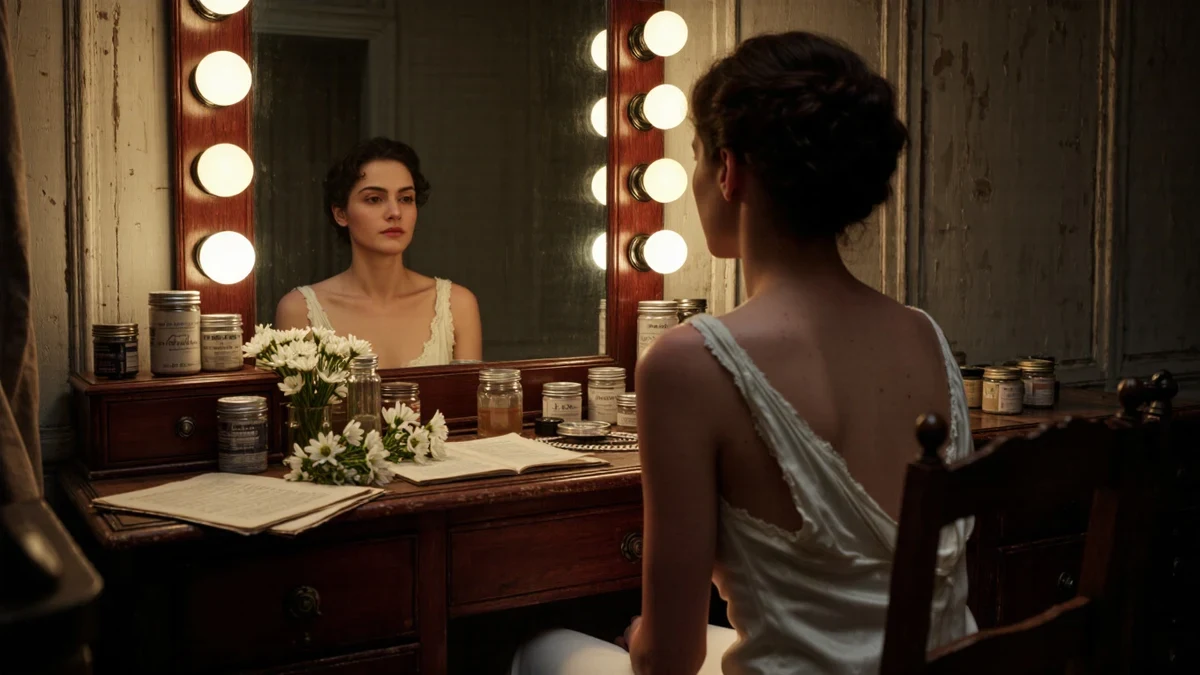
Millie Bobby Brown has spent 2026 describing her child-star transition herself. Speaking on the Happy, Sad, Confused podcast in June, she admitted "socialization" was a weakness: "I heard a lot of adult talk growing up, and didn't really talk about the things you're meant to talk about as a kid." Now 22, she is the window's clearest case study.
What Does Brown Say She Missed Growing Up on Set?
The set was her childhood's whole environment, and she says it spoke a different language. "You hear, 'Where's the grip? Let's grab a ladder,' you know, that's your whole conversation," Brown explained on the Happy, Sad, Confused episode, in remarks Page Six published on June 29, 2026. Her husband, Jake Bongiovi, is by her description the opposite — a "social butterfly" — and the couple married in May 2024, per the same report. The interview, taped around the release of Stranger Things' final season and her continuing Enola Holmes film work, ranged across Eleven's end and re-teaming with David Harbour, per the episode's own description.
What makes the interview valuable is its specificity. This is not a vague cautionary tale; it is a working actor, now 22, itemizing exactly which ordinary experiences — unstructured kid conversation, peer socialization outside a workplace — the decade on set displaced, and naming what she is doing about it now.
Millie Bobby Brown's own June 2026 interview on Josh Horowitz's Happy, Sad, Confused, where she discusses Eleven's end and the life skills growing up on set did not teach her.
How Has Her Life Changed Since Stranger Things?
The record since her 2016 breakout is one of deliberate adult milestones. The Daily Mail, in a September 18, 2026 retrospective of her decade since the series, reported that Brown and Bongiovi adopted their second child, with the star sharing on her own Instagram that the new baby was a boy; the couple adopted their first child, a daughter, in August 2025. The same report described the family's move toward a quieter farm life away from Hollywood — a home base she has documented on her own verified channels.
Career-wise, the transition has run through producing as much as acting. Yahoo's celebrity desk noted in June 2026 that Brown spent ten years on the Stranger Things set "as well as various movies that she starred in and even produced" — the Enola Holmes films chief among them — making her one of the few child stars to hold a producer credit before turning twenty. The professional pattern is consistent: own the material early, so the adult career is not waiting on casting directors.
What Is the Standard Path for Child Stars Who Stay?
Every child-star transition that works, Brown's included, tends to follow the same five moves, all visible in the confirmed record rather than in speculation:
- Finish the franchise on schedule, protecting the relationship with the audience that grew up alongside them.
- Add legitimacy outside the flagship — film roles, awards-adjacent work, producing credits — before the finale airs.
- Control the personal narrative through own-channel announcements: weddings, family news, causes.
- Build a life structure the press cannot define — Brown's farm, her marriage, her animal advocacy.
- Speak candidly, on the record, about what childhood stardom cost, in named interviews.
Why Do So Few Transitions Succeed?
Because the audience's memory is the hardest asset to manage. Viewers met Brown at eleven; the industry met her as a minor with a professional schedule. The Daily Mail's retrospective described a star who was "left 'anxious' by fame" in her own earlier remarks and swapped premieres for a farm — but the anxiety she has discussed is hers to define, on her platforms and in named interviews, which is exactly how this publication reports it. What derails most child stars is not one dramatic failure but the absence of the five moves above: no credits of their own, no channel of their own, no adult life the public story cannot reach.
Brown's version of the playbook is unusually complete at 22: a finished flagship franchise, producer credits, a marriage and family she announces herself, a home outside the industry's geography, and a willingness to name the cost in her own words. The next decade will test the adult career the way the last one tested the child one — but the foundation, unlike most, is documented.
What Should Fans Expect From Her Next?
Expect the pattern to continue: selective acting, active producing, and family news shared on her own channels first. The final season of Stranger Things closed the chapter that made her famous; everything since — the adoptions, the farm, the candid podcast appearances — has been the opening of the chapter she controls. For a publication that covers transitions from the confirmed record, hers is already the case study.
How Have Other Former Child Stars Handled the Same Turn?
The confirmed record offers a familiar fork. Some child actors step away entirely and negotiate privacy on their own terms; others convert early fame into producing, entrepreneurship, or music before the finale airs, so the adult identity exists before the child one retires. What separates the versions that hold up is control of the first announcement of whatever comes next — a casting, a company, a marriage — made on the star's own channel or through a representative. Brown's 2026 sits in that second tradition: the farm, the family news, and the candid interview slots are all hers to schedule, which is precisely the asset most child stars never get to own.
It helps that her generation has tools the last one did not. A verified account replaces the middleman; a producer credit replaces the waiting; a podcast appearance replaces the tabloid’s version of events. None of it makes the transition easy — her own words about missed childhood conversation make that plain — but it makes it documentable, and a documented transition is one the industry cannot rewrite after the fact.
What Is the Honest Way to Cover a Transition Like This?
The honest way is the one this piece has practiced: her statements, quoted exactly; her milestones, dated and sourced; her children mentioned only as she and Bongiovi announced them themselves; and no diagnosis of anyone’s inner life beyond what she has said on the record. Child stardom is a public childhood, and the adult career that follows deserves the same standard of confirmation as any other professional story. On that standard, the Brown file is unusually complete — a decade of credits, a wedding, a family, and a young woman telling the industry, in her own words and on her own schedule, what the ride actually cost and what she built anyway.