Influencer equity deals are partnerships where a creator takes part ownership in a brand instead of, or alongside, a cash payment. The creator promotes the product, and if the company grows, the stake grows in value too. The trade-off is real: less money up front, more money tied to how the business performs.
Not every partnership works this way. Most brand deals still run on straightforward money: a flat fee for a set number of posts, or a payment plus a cut of sales. Equity enters the picture when a creator believes in a product enough to bet on it long term, and when the brand can offer ownership instead of a bigger check. According to Coursera, building an influencer brand around a coherent presentation of personality, values and passions is what gives a creator authority on a specific topic, and that authority is exactly what brands are buying when they offer a stake rather than a fee.
What are the main ways creators get paid by brands?
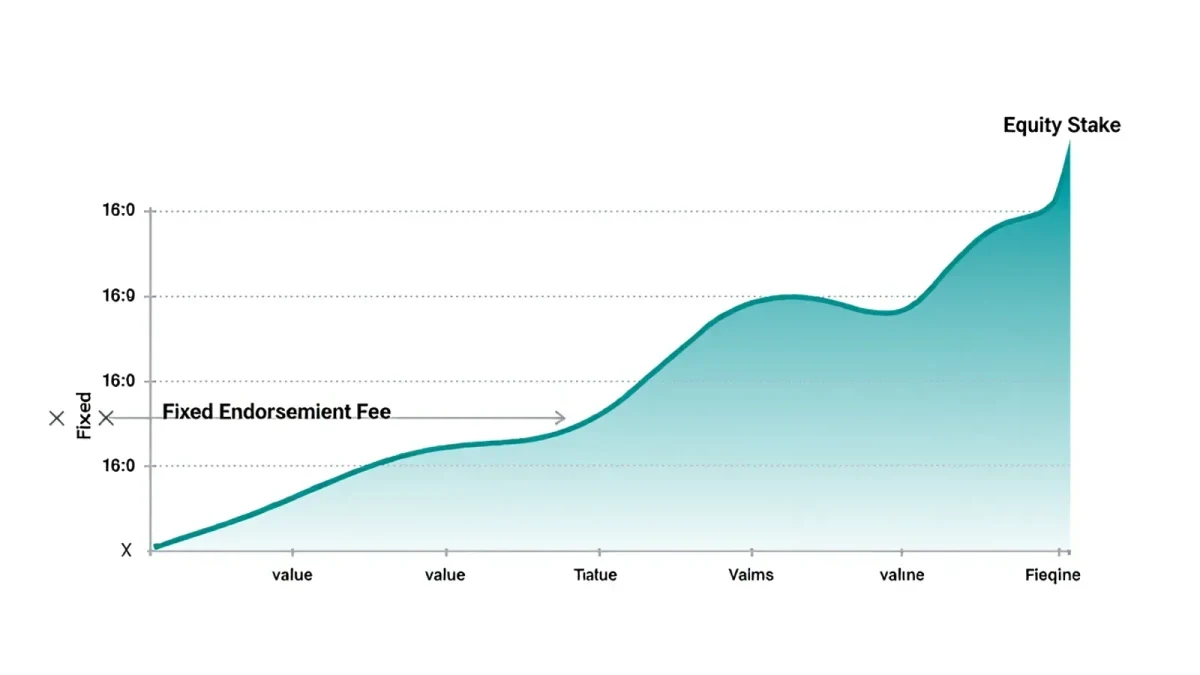
Three structures dominate. A flat fee pays a fixed amount for defined deliverables, such as a set number of posts or videos. A revenue share ties payment to performance, giving the creator a percentage of sales they drive. An equity deal gives the creator an ownership stake in the company itself.
Each structure shifts risk differently. A flat fee protects the creator: the brand pays whether the campaign works or not. A revenue share splits the risk, so both sides earn more when sales are strong. An equity deal puts the most risk on the creator, because the payout depends on the company's future value, not on any single post or season of sales.
Many real-world partnerships blend the three. A creator might take a smaller cash fee plus a revenue percentage, or a fee plus a small stake. The blend matters because it shows what each side believes: a brand offering equity is asking the creator to act like a co-owner, not a hired voice.
Why would a creator accept equity instead of cash?
The simple answer is upside. A fee has a ceiling; an ownership stake does not. If a product line or company becomes a lasting business, the stake can end up worth far more than any single campaign payment.
There is also a control argument. An owner helps shape the product, the branding and the roadmap. A spokesperson promotes what already exists. Creators who have spent years building a specific authority, the kind Coursera describes as the core of an influencer brand, often want that say, because their name is attached to everything the company ships.
The risk deserves equal weight. Private company stakes are hard to sell and hard to value. A creator who takes equity in a brand that stalls may walk away with nothing liquid. That is why experienced representatives usually push for a hybrid: some cash now, some ownership later.
What does an equity deal actually look like on paper?
The paperwork varies, but a few elements show up again and again.
- The stake. The agreement states what percentage or share class the creator receives, and whether it is granted up front or vests over time.
- The work commitment. Ownership usually comes with obligations: a minimum number of posts, appearances or product input per year.
- The cash component. Many deals pair the stake with a fee or a revenue share so the creator is not working entirely for future value.
- Exit terms. The contract addresses what happens if the brand is sold, if the creator leaves, or if the partnership sours.
That last point matters more than people expect. Ownership without clear exit terms can leave a creator holding shares in a company they no longer promote. Representatives and business managers, the professionals who negotiate these deals, spend much of their time on exactly those clauses.
How is this different from a creator-owned product line?
A product line, where the creator launches a brand under their own name, is the most committed version of ownership. The creator typically holds a large or controlling stake and carries the costs and risks of running the business. An equity partnership sits one step back: the creator owns part of someone else's company and lends their audience and credibility to it.
For a fuller picture of how those owned-brand structures operate, see How Creator Product Lines Really Work: Rhode, Skims, and Feastables Explained. The distinction matters for readers trying to read headlines: a creator "partnering" with a brand and a creator "founding" a brand are two very different levels of commitment and reward. This connects to our earlier piece, How Creator Product Lines Really Work: Rhode, Skims, and Feastables Explained.
What should creators weigh before signing an equity deal?
The first question is trust in the counterparty. Equity is only as good as the company behind it, so the creator's team will look at who runs the brand, how it is funded and whether its sales claims hold up. Vetting audience and sales performance is its own discipline, covered in How Creator Audience Metrics Actually Work, From Followers to Revenue.
The second question is fit. An equity deal works when the product genuinely matches what the creator already covers. Coursera's guidance on choosing a niche points to the same principle from the creator's side: the content a person most enjoys and the products they love using are the natural foundation for what they promote. A stake in a brand outside that lane reads as a paid endorsement, and audiences notice.
The third question is representation. As creator businesses have grown more complex, professional representation has grown with them; the convergence of creator agencies and Hollywood talent firms, covered in Why Creator Agencies and Hollywood Talent Firms Are Now Joining Forces, reflects how much negotiation muscle these deals now demand. For related coverage, see Why Creator Agencies and Hollywood Talent Firms Are Now Joining Forces.
Our analysis: the equity era rewards patience, not reach
The shift from fees to ownership marks a maturing creator economy. Reach alone no longer commands the best terms; brands want partners whose audiences actually buy, and creators want upside that outlasts a campaign. The deals that hold up share a pattern: genuine product fit, a cash component, and exit terms written before anything goes wrong. The deals that fail tend to skip one of the three, usually the last.
What remains unknown from the outside is the detail. Stakes in private companies are rarely disclosed, so readers should treat headline claims about creator ownership with care unless the creator or the brand confirms the terms on the record. That is the standard this publication applies to every deal it covers.